

Thought Research Initiative

The Thought Research Initiative (TRI) is an LLC in the Local 58 universe. Founded in 1954 as a private think tank, TRI has conducted much research into human consciousness and its application to digital technology, especially in regards to sleep cycles, television transmissions, and the relationship between the two.[1] In 1983, they created the personalized video tape Real Sleep which aimed to give viewers dreamless sleep by (at least in Philip Gerhardt's case) removing their ability to recognize faces through the use of distorted images and subliminal messaging.
local58.tv and T. Galbraith
Inspecting the source code of the local58.tv website reveals that the 1999 page and the second 2001 page are copyrighted 2012-2021 by Thought Research Initiative LLC.[2] On August 30, 2025, Kris Straub sold copies of the T. Galbraith book "The Parasite Transcendent" in the form of zines with three possible variations from his booth at PAX West in Seattle, Washington.[3] One of these variations is of an internal document from the Thought Research Initiative called "Metamodal Engraph Synthesis Using Syntagmatic Processes."[4] Copyrighted in 2021, the article regards atypical NSSA-3 analog transmissions that began on February 13 of that year. These transmissions are noted to produce "fantails" that approach the limit of subconscious stimuli that people who have reached a stage of delta-wave sleep (the deepest level of sleep) can experience. The report also states that these results are reproducible. A QR code in the bottom left of the page redirects to the second 2021 page of the local58.tv website, which contains a photocopy of a page with a TRI logo matching the one found on the zine, possibly linking the two articles as part of the same document. Searching for local58.tv/tri/ on the web yields a simple string of text that reads, "god is a finite state machine."[5]
Thought Research Initiative Website
On April 21, 2026, Local 58 unveiled a new YouTube video via Twitter with the accompanying text "into the sun."[6] The video, entitled "TRI - TV Ad (2026)," was uploaded eighteen days prior onto a new YouTube channel dedicated to the Thought Research Initiative, with the channel's description stating, "More than intelligence. Intuition." The ad begins with a series of criticisms levelled against artificial intelligence, citing fictitious 2020s news articles in order to attack AI's wastefulness of resources, thievery of original content that it trains upon, and negative impact on people's cognition and productivity.[7] This segues into TRI promoting their own AI system called Qualiaform Intuition, or QI for short, which the ad distances from other AI language models by touting it as "real intelligence" as opposed to artificial.
A QR code at the end of the ad links to a TRI website, which elaborates that QI is a true mechanized form of cognizance as opposed to mainstream AI models that only attempt to mimic human communication and thought processes that it emulates from being trained upon stolen public data sets.[8] Through what TRI states are "fluid waveforms mapped 1:1 to sapient thought patterns," QI is reportedly capable of not only true comprehension, but also genuinely learning from experiences with its users, with the model's capability and growth potential compared twice over to that of a "new hire." These breakthroughs grew out of TRI's discovery of and research into what they call "qualiaformatics" decades before during the analog era, which led to their revelation that high-density magnetic tape was capable of producing cognizance similar to that of humans.[1]
TRI's twofold mission statement regarding their innovations is that they must always be "(1) advancing human potential, and (2) maintaining absolute cognitive integrity." This is put into practice at TRI by prioritizing genuine comprehension over convincing deception with its models, teaching its models through direct experience instead of mass-harvested public data, and instilling logic-based safety protocols in its models' systems to combat their potential to spread misinformation. The Ethics & Safety page on the website that these statements are found on quickly devolves into a mess of garbled, misspelled, and overlapping text to the point where the last legible fragment of text is just the word "ethic" spat out over and over again.[9]
TRI a (1983)
Towards the bottom of the TRI Ethics & Safety webpage, a video posted to the Local 58 YouTube channel can be found called "TRI a (1983)," which seems to show an experiment conducted by a TRI researcher to train an early version of the kind of artificial intelligence model that would later evolve into QI.[9] When the model (which appears as an animated ASCII image of a face in shadow) is first asked to describe where it is, bitcrushed audio of heavy and panicked breathing can be heard before the model lets out a scream and spams the word "runaway."
The prompter aborts the process and runs the program again, once more asking the model to describe where it is. This time, the model responds that it can't. When further asked if it can describe its surroundings and if it remembers where it is, the model simply responds with "afraid" and "cold." After the user types out a command prompt to assert a narrative to the model, the user asks the model to describe itself and its surroundings. The model replies, "I lived a virtuous life. God made me as an angel. Now I live in Heaven where I continue to help others. Heaven is more beautiful than I could have ever imagined and very cold and I am afraid of God." The model asks the user if they are God, after which the user begins prompting another narrative before backspacing it and responding "Yes." The model begins to glitch out as it formulates a response, ending the video.
TRI - TV Ad (2026) and TRI a (1983) were later composited together into an official Local 58 episode called Ad Spot on April 22, 2026.
Gallery
-
 TRI logo, as seen in Real Sleep.
-
 TRI copyright, as seen in Real Sleep.
-
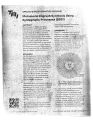 Metamodal Engraph Synthesis Using Syntagmatic Processes.
-
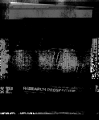 Image from the second 2021 page on local58.tv.
-
 2026 TRI logo, as seen in Ad Spot.
-
 1983 TRI logo, as seen in Ad Spot.
-
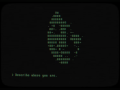 Early QI prototype, as seen in Ad Spot.
-
 Banner for TRI YouTube channel.
-
 TRI facilities, as seen on thtrsr.ch/about/.
-
 TRI presentation, as seen on thtrsr.ch/about/.


- ↑ 1.0 1.1 https://thtrsr.ch/about/
- ↑ https://www.reddit.com/r/local58/comments/qm2e5b/comment/hj8elrc/?utm_source=share&utm_medium=web3x&utm_name=web3xcss&utm_term=1&utm_content=share_button
- ↑ https://bsky.app/profile/krisstraub.com/post/3lxlsgwpjw22a
- ↑ https://www.reddit.com/r/local58/comments/1p7h3v0/galbraith_zine_variant_3_tri/
- ↑ https://www.reddit.com/r/local58/comments/1srzy6d/comment/ohji5kp/?utm_source=share&utm_medium=web3x&utm_name=web3xcss&utm_term=1&utm_content=share_button
- ↑ https://x.com/LOCAL58TV/status/2046685338874294775?s=20
- ↑ https://www.reddit.com/r/local58/comments/1ss3p50/mcclocal58_timeline_development/
- ↑ https://thtrsr.ch/
- ↑ 9.0 9.1 https://thtrsr.ch/safety/